Currently Empty: R0.00

You’ve seen the labels. You’ve walked the aisles. “Organic” appears on everything from apples to mattresses, and the price tag usually appears with it. But peel back the marketing and the question gets harder to answer: what does organic living actually mean, and is it worth the effort?
The honest answer is that organic isn’t a single thing. It’s a way of thinking about the relationship between your body, your food, and the world around you – and that thinking, once you adopt it, tends to change more than just your shopping list.
More than a label
The word “organic” gets thrown around so casually that it’s easy to forget it once meant something specific. At its core, organic refers to food and products grown or made without synthetic pesticides, fertilisers, growth hormones, or genetically modified inputs. The idea is to work with natural systems rather than override them – letting soil regenerate, crops rotate, and plants develop the nutrient density they would naturally have.
But organic living goes further than what’s on a certification sticker. It’s a broader philosophy: choosing whole foods over processed ones, asking where your products come from, paying attention to what you put on your skin and in your home, and recognising that the small choices you make daily add up to something significant over time.
It’s less about purity and more about awareness.
Why it matters more than people realise
For decades, mainstream food production has prioritised yield, shelf life, and visual appeal over nutritional quality. The result is food that looks the same as it did fifty years ago but doesn’t quite deliver the same nutritional content.
Modern soil is one of the quiet casualties. Intensive farming, monoculture crops, and chemical fertilisers have steadily depleted the minerals that plants would naturally draw up into their leaves and fruit. Studies tracking the nutrient content of common vegetables across decades have found measurable declines in essential minerals like magnesium, calcium, iron, and zinc – not because the vegetables themselves have changed, but because the soil they grow in has.
The implications are practical. Even if you’re eating well, by modern standards, your food may not be giving your body the foundation it needs.
This is one of the reasons organic produce can offer a meaningful difference. Organically farmed soil is allowed to rest, rotate, and rebuild. Plants grown in it tend to have higher mineral content, more antioxidants, and a more complete nutritional profile. You’re not just avoiding the bad – you’re getting more of the good.
The small choices that compound
Organic living doesn’t require a complete lifestyle overhaul. Most people who shift in this direction do so gradually, swapping one habit at a time as they learn what works for them.
A few starting points that tend to have outsized impact:
Start with what you eat most. If coffee is your daily ritual, organic coffee is a higher-leverage swap than organic peppers you eat once a week. The same applies to staples like rice, oats, eggs, and dairy.
Choose seasonal and local where possible. Produce that’s in season hasn’t been forced or transported across hemispheres, which usually means it’s more nutritionally complete and less reliant on chemical preservation.
Read past the front of the packet. “Natural,” “wholesome,” and “real” are marketing words, not regulated terms. The ingredient list tells the truth.
Reduce processed foods rather than eliminate categories. Most nutritional gain comes from cutting down on heavily processed items, not from cutting out gluten, dairy, or sugar entirely. Whole, minimally processed food in its natural form is the foundation.
Pay attention to what touches your skin. Skincare, deodorant, and laundry products carry ingredients that absorb directly into your body. Organic and natural alternatives are increasingly available and often comparable in price.
Filter your water. This is a small but consistent change that reduces exposure to chemical residues and improves the mineral profile of what you drink daily.
Where supplementation fits in
Even with the best intentions, organic eating has limits. Soil depletion is a global issue that organic farming softens but doesn’t fully solve. Modern lifestyles are also more demanding than the diets of previous generations were designed to support – chronic stress, environmental toxins, screen time, and disrupted sleep all increase the body’s need for foundational nutrients.
This is where carefully chosen supplementation earns its place. Not as a replacement for good food, but as support for the gaps that even good food can leave behind.
The key word is carefully. The supplement industry is enormous and largely unregulated, and the difference between a quality product and a marketing exercise can be significant. When considering a supplement, look for:
- Single-source ingredients rather than synthetic blends
- Bio-available forms that the body can actually absorb and use
- Transparency about where ingredients come from and how they’re processed
- A focus on minerals as well as vitamins – most supplement routines overlook minerals despite their foundational role
Minerals are the unsung heroes of the body’s daily function. They activate enzymes, support cellular energy production, regulate hormones, and form the structural foundation of bone, tissue, and muscle. Without them, the vitamins you take don’t work as effectively. With them, everything else in your wellness routine starts to do its job properly.
The goal isn’t perfection. Organic living done well is a calm, sustainable rhythm, not a high-pressure performance.
People who go all-in overnight tend to burn out within months. People who change one thing at a time, build the habit, and then add the next change tend to still be doing it five years later. Wellness isn’t a destination – it’s a slow accumulation of better choices, made repeatedly, until they become the default.
Start where it’s easiest. Notice the difference. Let the next change reveal itself.
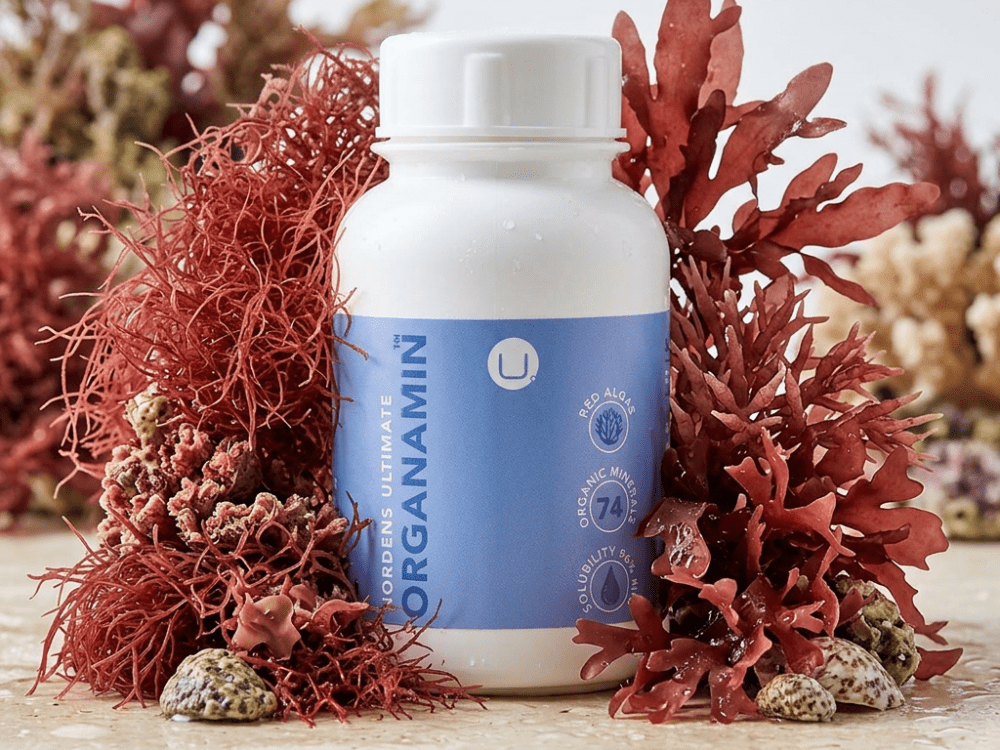
Nordens Ultimate Organamin is derived from red algae and contains 74 bio-available minerals – designed to support the foundation that organic living builds on.
[Shop Organamin → https://www.nordens.co.za/product/calcium-supplement-zinc-magnesium/
This product is a food supplement and is not intended to diagnose, treat, cure, or prevent any disease. Consult your healthcare practitioner before use if you are pregnant, nursing, taking chronic medication, or have a medical condition.